The idea that keeping a diary or journal can improve productivity is not new, studies over the years have revealed that writing down our thoughts can benefit mind & body.
Stunning Examples of 3D Drawings & How You Can Create Them Yourself
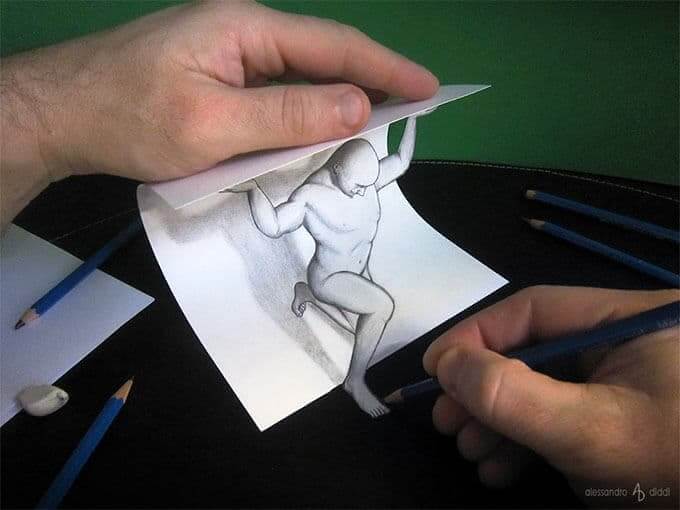
I’ve always been fascinated by 3D drawing and the idea that an artist could create such incredible illusions using nothing …
Staedtler Tradition Pencil Rubber-Tip – Review
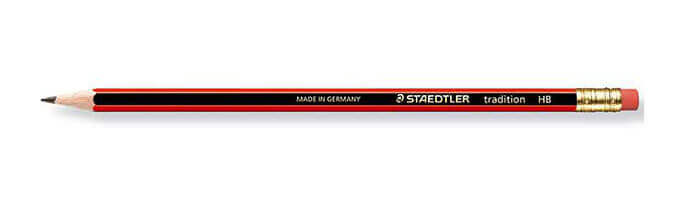
In today’s world, it seems some people think that nothing is worth doing manually, armed with their smartphones & the like that perform with speed, electronic gadgets are their preference. Where creativity & brainstorming are required however there will always be those that turn to a pen or pencil.
There is also the case for looking after the environment, when it comes to the many gizmos we hold dear that are upgraded at a rate of notts, what about all that plastic that has to be disposed of? This leads some to conclude “a wooden pencil has to be much more eco-friendly” doesn’t it?
No Good Way To Convert Handwritten Notes To Text?
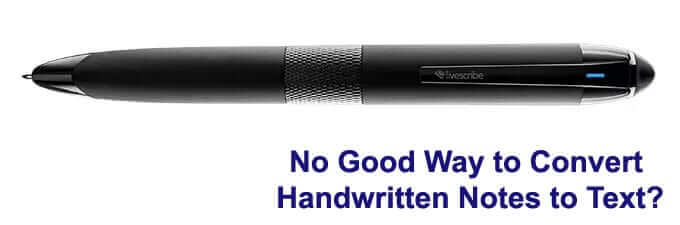
Like a lot of you, I carry a notebook every day and take a ton of handwritten notes about almost everything from grocery lists to my someday novel.
I prefer writing on paper with a pen and have no interest in using handwriting apps for the smartphone, digital pens or tablet and stylus to capture my thoughts. Something about that just seems to suck all the creativity right out of the process. Over the years, we’ve heard from many of you who feel exactly the same way.
Tracking The History Of Writing Instruments
That pen you’re holding in your hand, probably designed with laser precision in some 21st century facility in Japan, has come a long way in the last 5,000 years or so.
A recent piece on the patent history of ink pens over at IPWatchdog inspired us to round up a collection of timelines that describe the evolution of pens from the crude reeds used to carve clay in ancient Mesopotamia to some of the classics that we prize today.
A good place to start is a paper on the origins of writing instruments by the UK’s Writing Equipment Society. It traces the beginnings all the way back to 30,000 BCE when man was still drawing on cave walls and follows the trail through to the use of quill pens beginning about 1500 years ago.